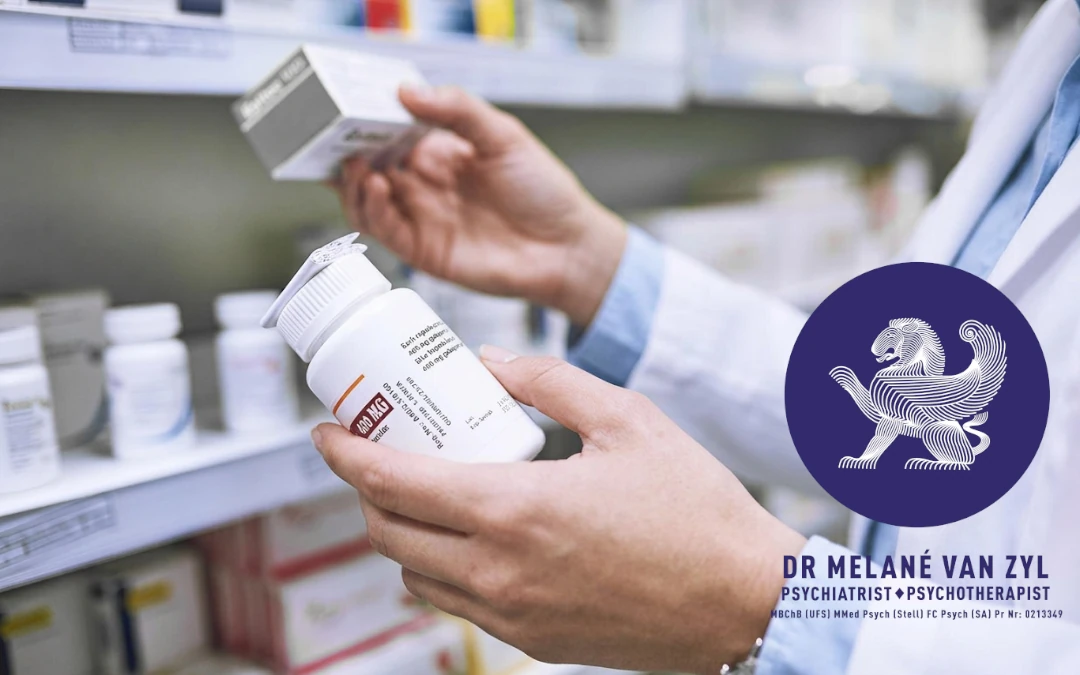
It can take years to find the right medication. There are trials and side effects, dosages adjusted and readjusted, until one day life feels steady again. You go back to work, you’re present for your family, and the illness that once ran your days fades into the background. Then you arrive at the clinic for your monthly supply and you’re told it isn’t in stock.
That is the reality facing a growing number of South Africans. Speaking on Radio 786’s On the Agenda, Dr Melané van Zyl, psychiatrist at Sandton Mediclinic and board member of the South African Society of Psychiatrists (SASOP), warned that shortages of essential psychiatric medicines in public hospitals across Gauteng, KwaZulu-Natal, the Western Cape and the Eastern Cape put patients’ hard-won stability at risk.
“Many of them have been very difficult to get to that place where they are stable,” Dr van Zyl explained.
Not a single cause
Exact figures are hard to come by, but Dr van Zyl said reports of serious problems keep coming in. What worries the Society most is how widespread the shortages are. They’re not tied to one product or one supplier.
“The shortages are across different manufacturers,” she said, “so we can’t pinpoint it to a single cause.”
Because the problem doesn’t have one obvious source, there’s no quick fix either. That makes it all the more important for doctors and patients to know about a shortage as early as possible.
What stability protects
For people unfamiliar with serious mental illness, a gap in treatment might sound like an inconvenience. Dr van Zyl explained why it’s far more than that, using bipolar mood disorder as an example.
Without treatment, people with bipolar disorder can relapse into manic or depressive episodes. During a manic episode, a person “can become a danger for themselves and others”. They may spend money they don’t have or act impulsively in ways that damage relationships and livelihoods. At the other extreme, a depressive episode can bring a serious risk of suicide.
The harm spreads well beyond the individual. Patients who relapse may no longer be able to work or care for their families, and many will end up needing care from public hospitals that are already struggling to cope.
Listen to the interview:
Psychiatric medication shortages
No easy substitute
There is a second danger. Some psychiatric medications can’t safely be stopped “cold turkey”. When the supply suddenly runs out, patients can go into withdrawal, and how severe that is depends on the medication.
Switching to something else isn’t always straightforward either. For some medicines, Dr van Zyl noted, there is no generic version and no therapeutic equivalent to fall back on.
That’s why timing matters so much. “We need to act very quickly to get a plan for patients in place,” she said. That plan might mean sourcing the medication from another pharmacy, finding it elsewhere, or carefully converting the patient to something similar, and then following up to make sure they stay well.
Don’t go it alone
Dr van Zyl was realistic about the bigger picture. Hospitals and clinics operate under regulations, and the problem is far more complex than it sounds. Shortages probably can’t always be prevented. Some patients are able to get a private prescription and buy their medication themselves, but she was clear that patients can’t be expected to pay for it.
What she did ask for was information, and early action. As soon as you learn that your medication isn’t available, reach out to whoever usually supplies or prescribes it: your doctor or your pharmacist. They can start looking for alternatives while there is still time to make a safe plan.
Her most important message was simple: “Patients shouldn’t make their own plans.”
That means not stretching your tablets to make them last, not stopping abruptly, and not swapping in something a friend or family member uses. The stability you worked so hard to reach is worth protecting properly, with professional guidance.
A shared responsibility
A shortage on the shelf doesn’t have to end in relapse. When patients speak up early, and doctors and pharmacists are informed in time, there is room to find a safe way through.
If your medication is unavailable, don’t wait until you feel unwell. Pick up the phone and talk to your doctor or pharmacist today.
Where to find help
If you or someone you love is struggling, the South African Depression and Anxiety Group (SADAG) offers support, information and helplines at www.sadag.org
– This article is based on an interview with Dr Melané van Zyl, board member of the South African Society of Psychiatrists, on Radio 786’s On the Agenda (17 November 2026).